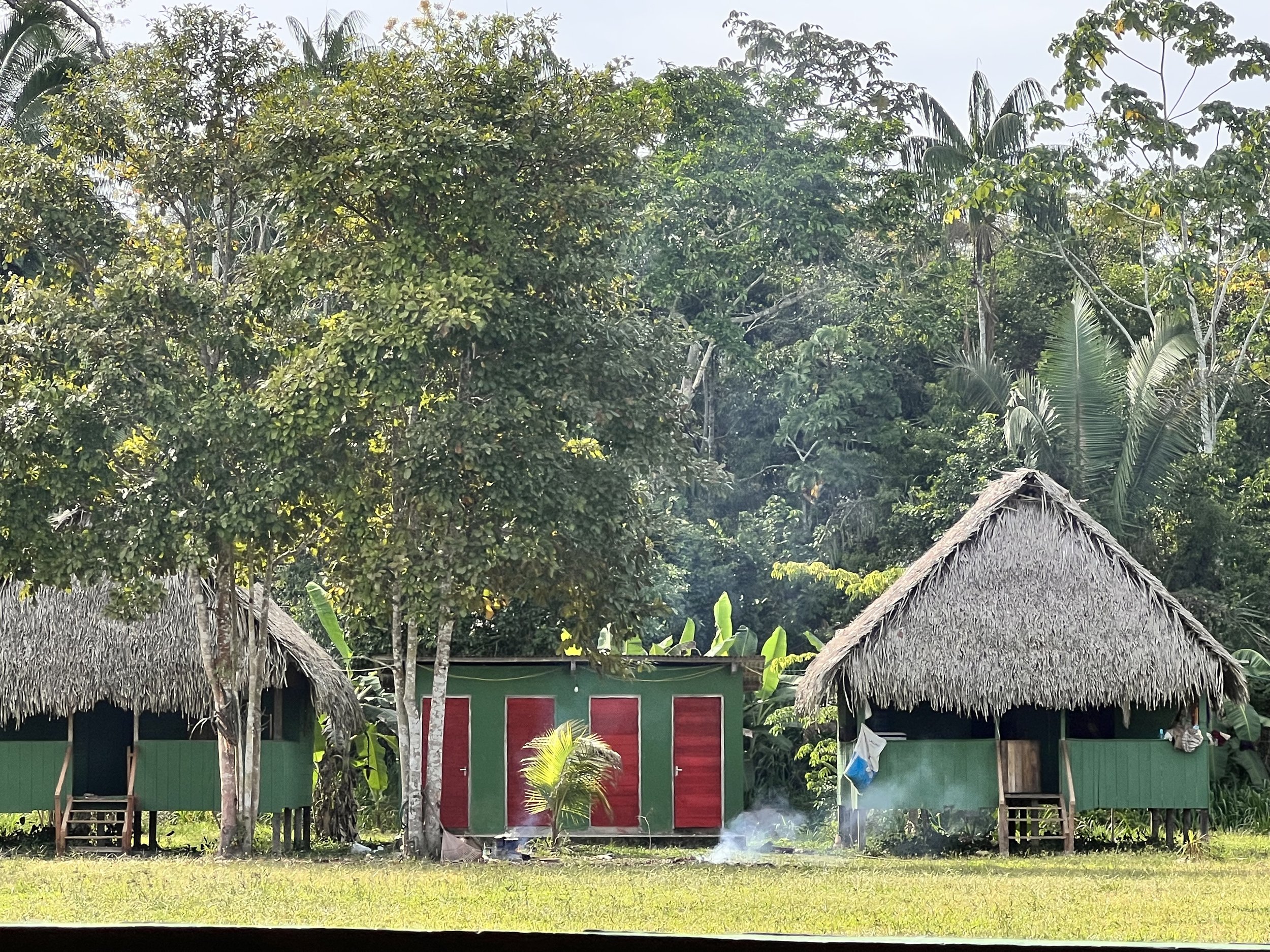
Yorenka Tasorentsi Institute
The Yorenka Tasorentsi Institute stands for the preservation and safeguarding of nature, native wisdom and indigenous culture. It is led by Benki Piyãko, an indigenous and spiritual leader and ecological activist who is creating innovative systems to convert pasture lands into abundant natural reserves. In doing so, a sustainable system will emerge to transform the local region and eventually the entire world. The Institute's vision is to implement a conscious and sustainable approach to the coexistence of human beings and nature. It develops tangible solutions that preserve the environment, traditional knowledge and indigenous culture with modern techniques, offering a response to the current planetary crisis by addressing ecological, cultural and social issues in an integrative way.
Benki is an indigenous political and spiritual leader from the Ashaninka tribe working for the rights and preservation of native peoples, their cultures and lands, and for nature. He was designated to be one of the Ashaninka “pajés” or shamans, and, from a very young age, started fighting for the protection of their lands and the Amazon Forest. He fully commits himself to healing the world through the traditional knowledge that has been passed down from his ancestors.
The Nest
The Nest is a landscape of restoration. From the inner psyche to the soil beneath our feet, we work across three relational pillars: Self, Community, and Land. The work moves from restoring ourselves to restoring our planet: from ego to eco. Its impacts are ecological, social, economic, and spiritual. The Nest was founded by Luiza Krapels, a former lawyer and a Jungian psychoanalyst.
Luiza believes that healing moves from the inside out — that we are not separate from nature, but nature itself. What fragments the world fragments us; what restores us begins to restore the world. Dreams are messengers from the unconscious — precise, symbolic, and deeply intelligent. But healing the individual psyche asks more than personal insight alone. What we carry collectively — the inherited patterns, wounds, and wisdom of those who came before — lives in us too. It must be met, honored, and integrated alongside the personal. Only then can we begin to move toward wholeness. And nature is the ground of that movement. The forest knows things the mind has forgotten. The body remembers what the ego has disowned. Long before modern psychology existed, the natural world was humanity's first and most enduring place of healing.